
Blog
Recent Posts



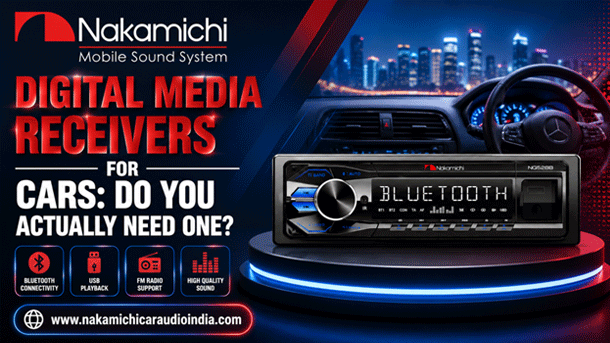
Digital Media Receivers for Cars: Do You Actually Need One?
Ask ten drivers what "Digital Media Receiver" even means, and half will shrug. It's just the stereo. But the gap between what a 2018 factory unit does and what a 2026 aftermarket one does has gotten wide enough to matter.
Why Install a Digital Media Receiver at All
Here's the blunt version: discs are gone. Nobody's burning CDs for the car in 2026, so a unit built around a disc mechanism is wasting internal space on hardware that never gets used.
What replaces it is simpler. Bluetooth handles the phone connection. USB handles anything stored locally. Somewhere in between, sound quality quietly improves too — an entry-level digital unit usually runs a cleaner signal chain than a ten-year-old factory stereo ever did, and it's noticeable the first time a bass-heavy track comes on.
Do You Actually Need a New One?
Depends what's already broken. Calls dropping halfway through a sentence is one sign. A touchscreen that lags a full second behind a finger is another. Digging out a tangled AUX cable every single morning is the third, and honestly, the most annoying.
One of those, maybe live with it a while longer. All three at once means the factory unit has become the weak point in an otherwise fine car.
What a car digital media receiver Actually Gets You
Hands-free calling matters more than people expect until they've had it — a long highway stretch feels different with a call running through the speakers instead of held up to an ear. A digital media receiver with Bluetooth running version 5.0 or better also holds a connection through underground parking and tunnels far better than older chipsets, which drop and re-pair constantly.
There's a resale angle buried in it too, one most people don't think about until they're selling. Buyers checking a used car now ask about the stereo almost as often as they ask about the odometer.
Five Nakamichi Units Worth Actually Comparing
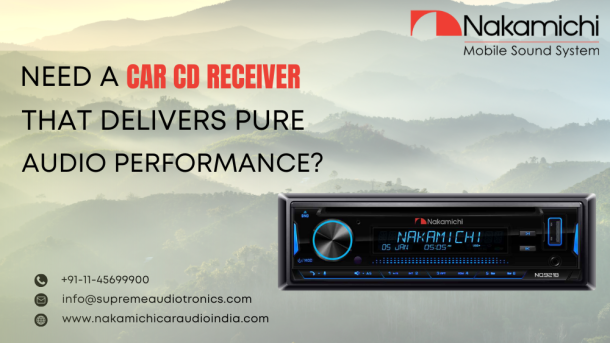
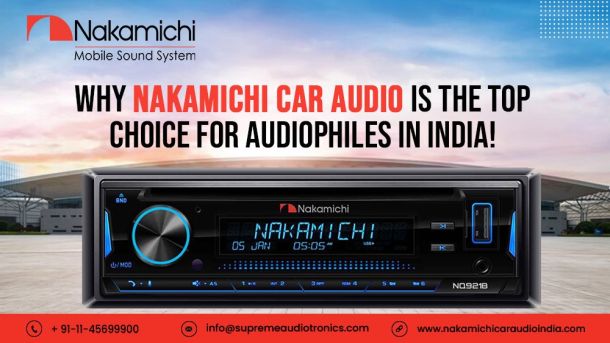
NAKAMICHI NQ512BB - 50W x 4 output, Bluetooth 5.1 covering A2DP, AVRCP, and HFP. USB playback tops out at MP3 and WMA off a 64GB drive. Small footprint too, 178x111x50mm, which is why it slots into most factory single-DIN openings without a fight.
NAKAMICHI NQ513BB- Nearly the same unit as the 512BB on paper. The difference sits in the USB index — FLAC and AAC join MP3 and WMA here. Small upgrade, but it matters if lossless files are already sitting on a phone or drive.
NAKAMICHI NQ523BD -Bluetooth drops to 5.0, a slight step back, but this one adds a 2V pre-output for anyone planning to run a separate amp later. Format support widens considerably too — MP3, WMA, APE, FLAC, AAC, M4A, and WAV all play.
NAKAMICHI NQ723BD-Same format list as the 523BD, same general shape, but the pre-output jumps to 4V. That's not a marketing spec bump. Higher preamp voltage means less noise creeping into an amplified system over a long RCA run, which any installer running a serious setup will actually care about.
Between the fur: the 512BB and 513BB are built for someone who just wants Bluetooth and USB sorted, nothing more. The 523BD and 723BD make sense once an amp enters the picture — that voltage gap isn't cosmetic; it's the whole reason to pick one over the other.
Is Professional Installation Worth Paying For?
Mechanically, dropping one of these into a factory ISO harness takes maybe twenty minutes with a screwdriver. Plenty of people manage it fine on a Saturday afternoon.
Where it goes wrong is everything around the unit itself — steering wheel controls that stop working, a reverse camera feed that's suddenly half-broken, and dash trim that never quite clips back flush. A shop visit runs a few hundred rupees and skips all three problems entirely. Worth it for anyone who isn't already comfortable pulling a dashboard apart.
Why Nakamichi Specifically
The car audio side of Nakamichi has been rebuilt since long by a expert team of audio engineers, not a badge slapped onto someone else's factory hardware. It shows in small ways — spec sheets that are actually consistent across the lineup, format support that doesn't randomly vary between models for no reason, and that deliberate voltage spread between the 523BD and 723BD that lets an installer plan a build instead of guessing which unit fits.
Leave a Reply
Your email address will not be published. Required fields are marked
Comments