
Blog
Recent Posts




























How to Choose the Best Amplifier for Car Speakers?
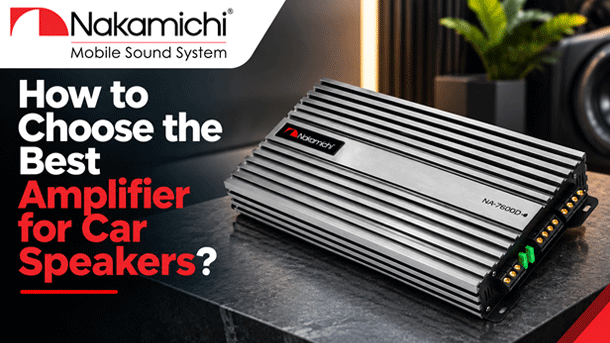
Nobody thinks about the amplifier until the factory system starts sounding thin at higher volumes. That's usually the missing piece — the part deciding whether upgraded speakers actually sound the way they're supposed to, not just louder, but cleaner too. Get it wrong, and speakers end up underpowered, or the whole system distorts long before it gets anywhere near loud. Nakamichi put this guide together to cover what actually matters before buying one.
What Are Car Audio Amplifiers?
An amplifier's job is simple on paper: take the weak signal coming out of a head unit and boost it enough to drive speakers properly. Factory stereos don't have much power to spare, barely enough for stock speakers, let alone anything upgraded. That's the gap car audio amplifiers exist to close, sending clean, boosted power to each speaker so it performs the way it was actually built to. Skip one, and even a solid set of aftermarket speakers ends up sounding flat.
Why Choose a 4-Channel Car Amplifier?
Four speakers off one unit — that's the whole appeal of a 4-channel setup, and it's why most everyday car audio builds land here. Running separate amps for front and rear speakers gets messy fast. One 4-channel amplifier handles the whole system instead; wiring stays simpler, and the install itself ends up a lot cleaner. There's also room to bridge channels later for a subwoofer, something single- or dual-channel setups can't really pull off without extra hardware.
How to Choose an Amplifier for Car Speakers
A handful of specifics actually decide whether an amplifier for car speakers performs well or just sits there underused.
- RMS power matching - The amp's continuous power output should line up with what the speakers are actually rated for, not the peak number printed on the box.
- Speaker impedance- matters just as much. Mismatched ohms between amp and speakers cause overheating, weak output, sometimes both at once.
- Number of channels- depends entirely on the setup: how many speakers, and whether a subwoofer needs power too.
Installation space and overall compatibility round it out. Trunk space, wiring runs, and the vehicle's existing setup all affect which physical size actually fits.
4-Channel vs Other Car Audio Amplifiers
- 2-channel vs 4-channel: a 2-channel amp only drives two speakers or a subwoofer. A 4-channel setup covers a full front-and-rear speaker system on its own, no second unit needed.
- Mono vs 4-channel: mono amps are a different thing— built specifically for subwoofers and low-frequency output, not general speaker duty.
Which Setup Fits Which Build?
A simple front-and-rear upgrade usually calls for 4 Channel car amplifiers, while a dedicated bass setup leans mono, and larger builds sometimes run both together.
Nakamichi's 4-Channel car amplifiers are built around exactly this kind of everyday setup, with clean RMS ratings that hold up under real, continuous use instead of just looking good on a spec sheet.
Installation & Setup Tips
Mounting location matters more than most people expect. Heat and moisture shorten an amplifier's life fast, so anywhere away from direct engine heat or trunk water exposure works better over the long run. Wiring gauge needs to match the amp's power draw too — undersized wiring is a common reason amps run hot or underperform. A stable, properly grounded connection counts for just as much as the amp itself, and it's usually the step installers rush through.
Conclusion
The right amplifier changes a car audio setup completely, turning speakers that used to sound flat into something that actually holds up at real volume. Nakamichi's amplifier range, gives builders a solid starting point whether the goal is a simple speaker upgrade or a full four-channel setup built around better sound overall. Choose the right car audio amplifier for your speakers and upgrade your ride.
Leave a Reply
Your email address will not be published. Required fields are marked
Comments